
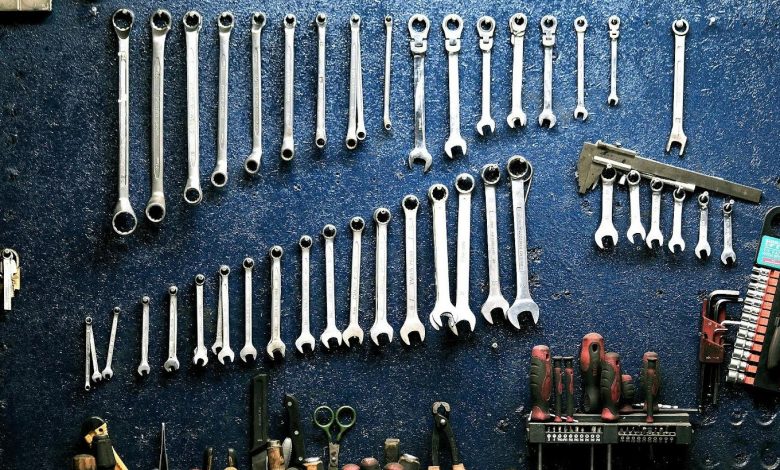
From Garage Projects to Professional Builds: Tools That Make Work Easier
A garage workspace usually grows step by step. In the beginning, a few basic tools are enough for small repairs around the house. Tightening a loose hinge, fixing a chair, or installing a shelf does not require complicated equipment. But projects rarely stay that simple. As materials become thicker and fittings more complex, the need for better tools becomes clear. What worked for small fixes may not work when accuracy and depth start to matter.
Interest in practical, hands-on work has increased again in recent years. Many homeowners now handle smaller repairs themselves instead of calling a professional every time something breaks. Tasks like assembling furniture, repairing garden structures, adjusting bike parts, or installing storage units have become normal weekend work in many homes. The correct tools not only improve results but also reduce the chances of damaging materials while drilling, fastening, or cutting.
The idea behind this is straightforward. When a tool is suited to the job, the work becomes more controlled and predictable.
When Basic Tools Start Showing Their Limits
Most garages begin with the same core tools. A cordless drill, hammer, screwdriver set, and measuring tape usually cover the majority of everyday repairs. These tools remain useful for years and are still part of almost every workshop.
However, certain projects introduce challenges that these tools cannot handle easily. Installing hardware in tight corners, drilling through thick timber, or working with metal brackets requires more control and sometimes more reach than standard tools provide.
Drilling is a common example. A regular drill bit performs well when working with thin materials or shallow holes. But when the material is thicker, or the hole must reach deeper into a component, the bit may simply be too short. Trying to push harder or adjust the drill angle often leads to uneven holes or unnecessary strain on the drill.
This is exactly why specialised tools exist. They are designed for situations where ordinary tools struggle to deliver clean and precise results.
Accuracy Makes a Real Difference
In many workshop environments, people focus too much on working quickly. In reality, careful accuracy often saves far more time than speed.
A bracket may not fit properly if the hole is drilled slightly off center. The surrounding region may be weakened by a badly drilled metal opening. An entire project can be slowed down by even minor errors since correcting them typically takes longer and harder than drilling the hole correctly in the first place.
These issues are lessened with the use of precision tools. Longer drill bits are occasionally required to maintain a straight and steady drilling line when materials are thick or access is restricted. Because of this, when more drilling depth is needed, experts may rely on specialist tools like long series drill bits. The drill may run more smoothly and create a more precise and clean hole when the right length is used.
Modern Tools Are Designed More Carefully
Over the past ten years, tool manufacturing has gradually improved. Even though many of the modifications are minor, they have an evident and noticeable effect on actual work.
Stronger alloys, protective coatings, and improved cutting angles are common features of modern drill bits and cutting tools. When drilling through more difficult materials, these characteristics help tools stay sharp longer and produce less heat.
Modern building and repair materials might be difficult to work with. When drilled, hardwood, stainless steel, engineered boards, and reinforced polymers all react differently. Tools designed with improved geometry and coatings perform far better in these situations than older designs.
Engineering research discussed by the American Society of Mechanical Engineers explains how improved cutting geometry reduces friction and improves drilling performance in dense materials.
For builders and technicians, these technical improvements translate directly into smoother drilling and longer tool life.
Reliable Tools Improve the Work Process
Anyone who spends time working in a garage eventually recognises the difference between struggling with a tool and using one that performs properly. When tools behave consistently, work becomes easier to control.
This matters even more in smaller workspaces. Garages often have limited space, uneven lighting, or awkward angles that make certain tasks difficult. Equipment that performs reliably helps reduce mistakes under those conditions.
Professional workshops have always treated tool quality as essential rather than optional. The same thinking applies to home workshops as well. Even a small improvement in tool capability can remove many of the small frustrations that slow down practical work.
Skills and Tools Develop Together
Practical skills tend to grow gradually. Someone who starts with simple household repairs may later move on to installing fixtures, improving storage systems, or handling mechanical components.
As projects become more advanced, the tools used for those tasks often change as well. New equipment is added not for convenience, but because certain jobs require more accurate solutions.
Experience is not replaced by tools; rather, they enhance it. Projects proceed more easily and produce significantly more reliable and consistent outcomes when the equipment is right for the task.